
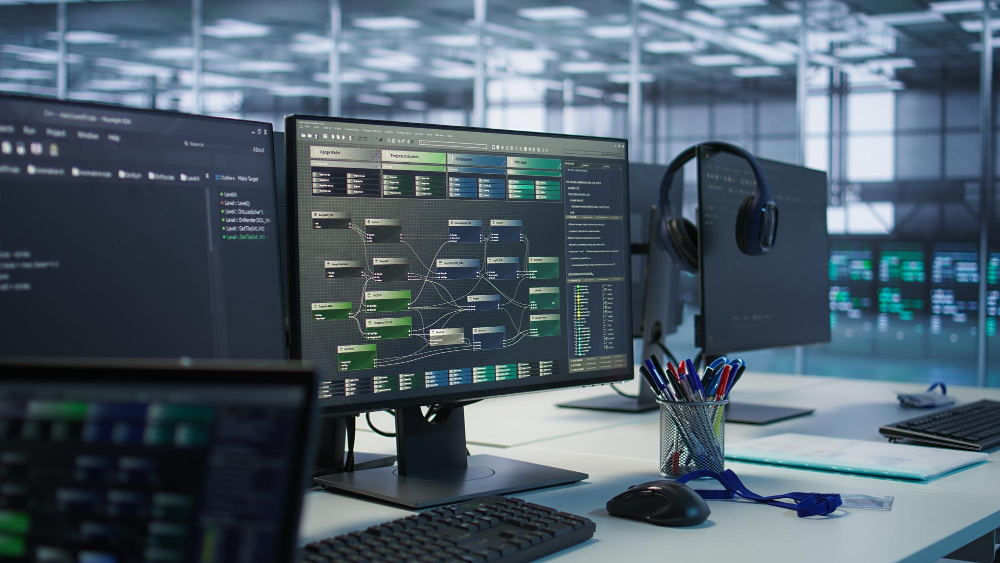

Many security systems still rely on a Video Management System (VMS). This allows camera footage to be centrally managed and incidents to be reviewed afterwards.
However, the volume of footage is growing faster than the capacity to process it. That is why more and more organisations are combining their VMS with AI video analytics. AI filters out irrelevant alerts, enabling faster and more targeted responses. The role of the Video Management System is shifting from storage to insight and action. shifts from storage to insight and action. [1]
A Video Management System is primarily designed for management and availability. You use it to view live footage, store recordings, retrieve fragments and export data.
Where a standard Video Management System typically falls short is in automatically interpreting what is happening on screen. Without additional analysis, the system remains dependent on:
That explains why CCTV systems in many organizations still function too often as a form of archive. They are valuable after an incident, but limited before or during an incident.
A traditional Video Management System records what happens. AI takes it a step further.
AI video analytics identifies events as they happen. There is no need to search through your Video Management System afterwards. You can act immediately.
A well-known drawback of basic motion detection is the high number of irrelevant alerts. Think of animals, shadows, weather conditions or moving vegetation. Control rooms often lose valuable time responding to alerts that require no action.
AI video analytics works more precisely by first determining what is visible, such as a person or vehicle, and only then triggering an alert. Many providers refer to this asFalse alarm filtering’The notifications are then reset as events in the Video Management System, allowing operators to assess and follow up on everything in the same environment.
In addition, modern AI technology operates with very high accuracy levels. Performance depends on data quality and system training. Soldefence guarantees an accuracy rate of 96% to 98%, which is exceptionally high.
The difference between recording and control lies here: you do not just know that something is happening, but also what is happening and whether intervention is required.
In practice, organisations structure this as a chain: detection, followed by analysis and classification based on characteristics such as shape and behaviour. Only relevant threats trigger alerts.
For many organisations, the Video Management System remains the central platform. It is where footage is viewed and stored. AI therefore often functions as an additional layer on top of the existing system.
The setup is typically clear and logical:
This means you do not need to replace your existing infrastructure, but you can make it smarter and more efficient.
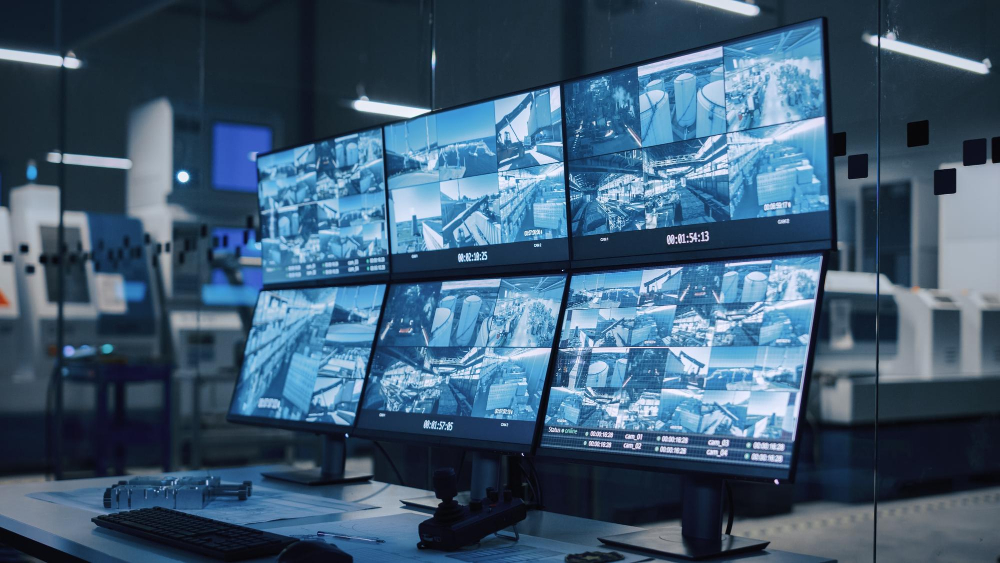
At large-scale locations such as solar farms, traditional camera systems reach their limits more quickly. These sites are often remote, poorly lit and widely spread. As a result, signals are more easily missed and it takes longer to assess what is actually happening.
In addition, there are often unnecessary alerts caused by wildlife and weather conditions. Without context, it becomes difficult to act immediately. Simply reviewing footage in a Video Management System is no longer sufficient.
That is why organisations increasingly adopt a layered approach: detect first, then assess what is happening, and respond quickly when needed. This approach is commonly used in solar park security.
Learn more about alarm response.
A Video Management System remains the foundation for management, storage and review. If you want less noise and faster response, AI video analytics is a logical additional layer.
In short: a VMS organises footage. AI turns that footage into actionable insight.
AI turns that footage into actionable insight. Are you responsible for securing a large-scale site, such as a solar farm or wind farm? Request a non-binding analysis of your current camera system.You will quickly see where AI video analytics adds immediate value, with fewer false alerts and faster response.
A Video Management System manages and stores camera footage. AI-based camera security analyses that footage and helps determine what is relevant, enabling faster detection and response.
A Video Management System often responds to motion. AI first determines what is actually happening, for example whether it involves a person or a vehicle, and only then triggers an alert. This results in less noise.
When there are many cameras, alerts contain too much noise, or rapid response is critical. AI helps to assess events more quickly and enables alerts to be handled directly within the same operational environment.
[1] Security Journal UK. (n.d.). VMS platforms and the shift to insight https://securityjournaluk.com/vms-platforms-and-the-shift-to-insight/
© Soldefence 2025 | Online realisation: 050 Marketing
 NL NL
NL NL  EN
EN
 DE
DE