
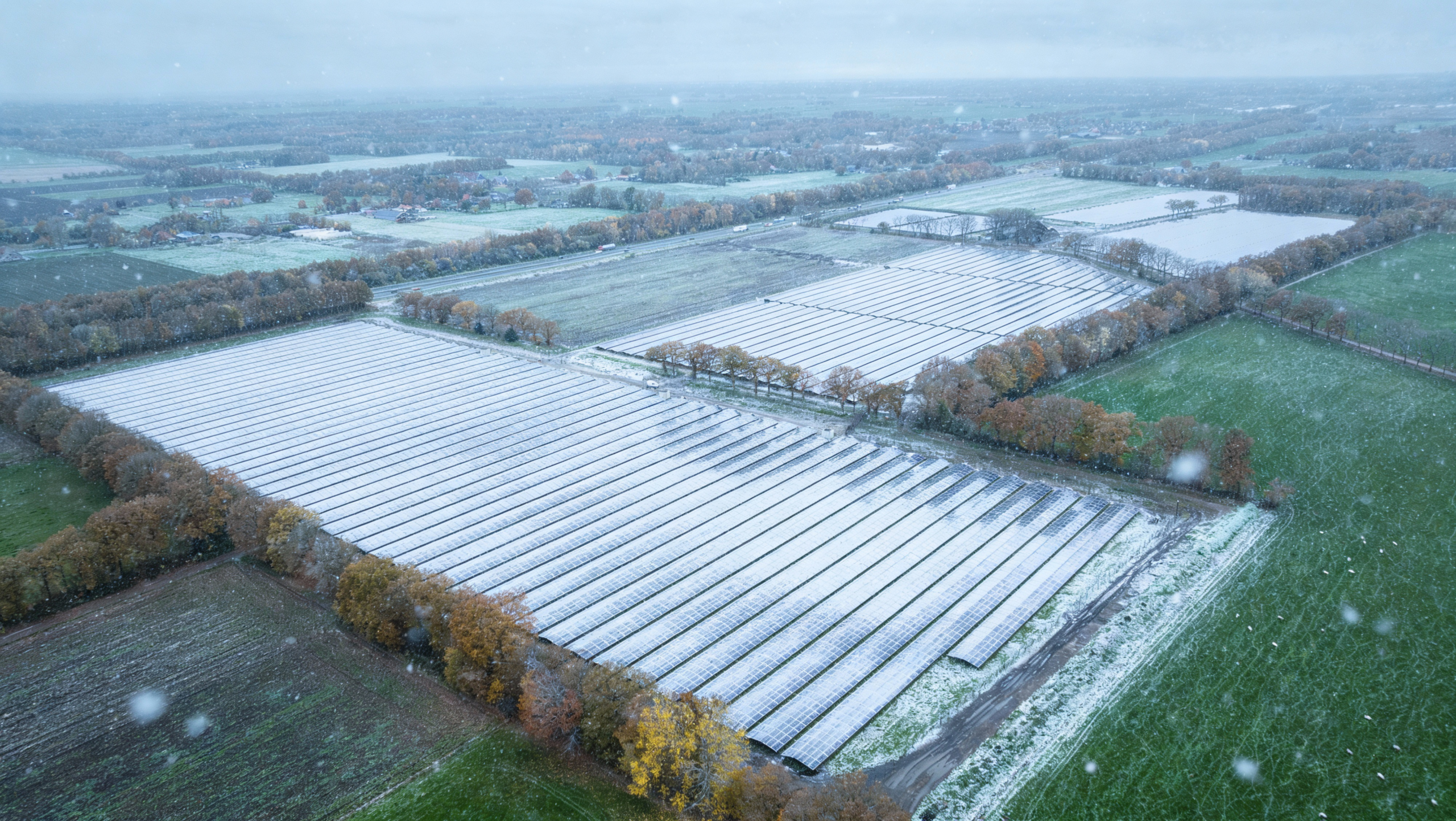

Winter is an underestimated season for solar farms. While yields decrease, operational risks actually increase. Solar panels continue to generate energy in winter, but only if they are well-designed, maintained, and secured. For solar farm managers, it is crucial to know what is fact and what is fiction.
In this article, we share five essential facts about solar panels in winter that every solar farm manager should know.
A common assumption is that solar panels generate hardly any electricity in the winter. This is incorrect. Solar panels convert sunlight into electricity, not heat, which means they continue to function even at low temperatures.
In fact, solar panels often perform more efficiently in cold weather than in extreme heat. The low yield in winter is mainly caused by:
For solar farms, this means lower output, but certainly not a complete standstill. Solar panels remain an active source of energy in winter, provided the installation is well designed and free from long-term obstructions.
Snowfall often triggers an immediate urge to intervene. However, in most cases, this is not necessary, and sometimes it's even inadvisable.
Solar panels are smooth and sloped, which often means snow melts away on its own or slides down as soon as the sun breaks through. Manually removing snow can:
For large-scale solar parks, the principle is to leave snow as it is and monitor the yield. Only when panels remain completely covered for an extended period may targeted action be necessary.
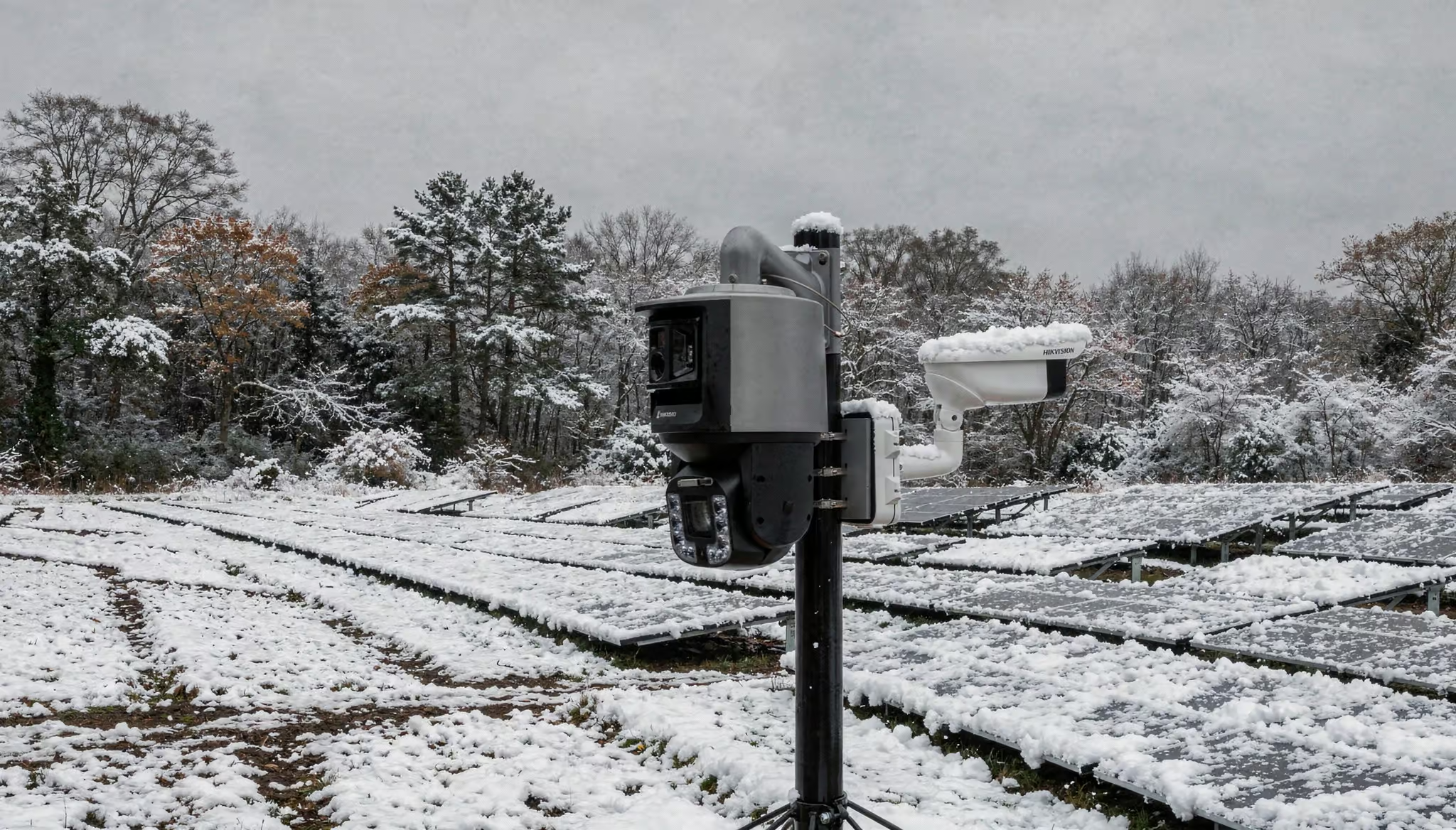
Where energy yield decreases in winter, the risk increases. During this period, solar parks face:
This is what makes solar parks more susceptible to theft, vandalism and sabotage. Copper cables and inverters are particularly vulnerable. Solar panels in winter therefore require not only technical maintenance but also enhanced security.
Without effective detection, incidents can go unnoticed for days, with a direct impact on performance and availability.
Winter conditions place high demands on security technology. Snow reflection, frost, and early darkness create:
Effective CCTV security Requirements for solar panels in winter:
Soldefence secures solar parks with intelligent camera and detection systems which are designed for critical infrastructure. Not for ideal conditions, but for situations where things can go wrong.
In winter, visual inspections are more difficult and physical presence is often limited. That is precisely why continuous monitoring is essential. Smart monitoring makes it possible to:
For solar farm operators, this means greater control over performance and risks, even when the farm is temporarily generating less energy. Solar panels in winter require data-driven management, not guesswork.
Soldefence helps solar park operators with intelligent security and continuous monitoring, specially designed to withstand all weather conditions. Get in touch and find out How we protect your solar park, all year round.
Yes, the yield is lower in winter than in summer, but solar panels continue to produce energy structurally during the winter months.
No, snow does not cause damage and disappears on its own. Active removal is usually not necessary.
Due to longer nights, reduced visibility, and lower activity, the risk of theft and vandalism increases.
Sources:
Sustainable News. (2026, 12 January). Sustainable and current. https://duurzaam-actueel.nl/
Hallostroom (2024, 1 September). Do solar panels work in the winter? https://hallostroom.nl/
© Soldefence 2025 | Online realisation: 050 Marketing
 Nederlands Nederlands
  English (UK)
 Deutsch
 Polski
 Español