
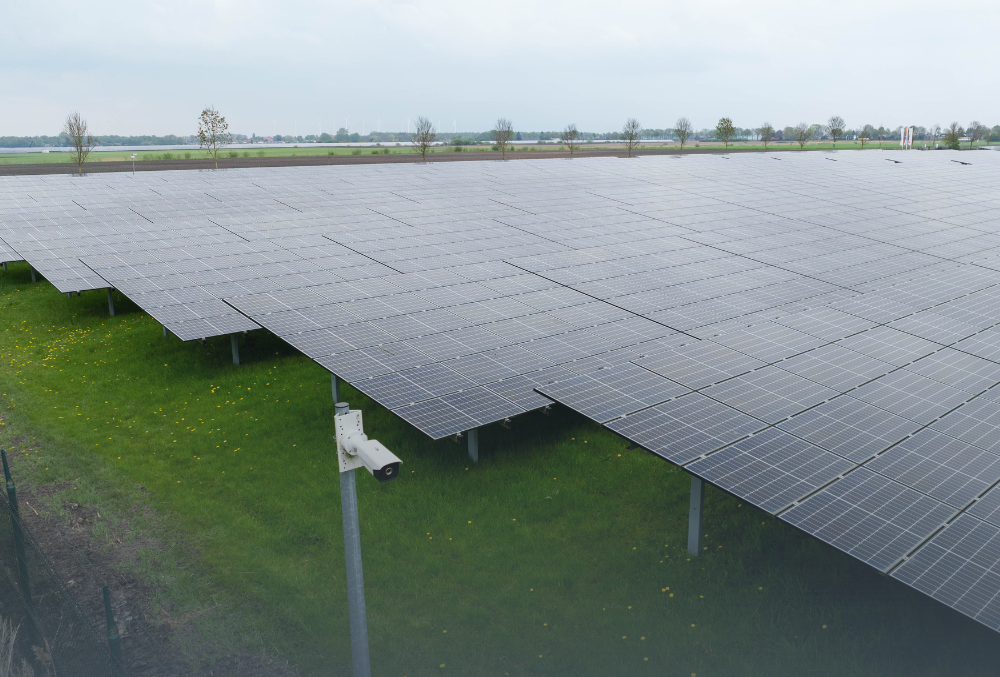

False alarms at solar parks are a growing problem within the security of energy infrastructure. Cameras raise false alarms due to rain, shadows, animals, moving vegetation or weather changes, when there is no real threat. This leads to unnecessary follow-ups, high operational costs and overloaded control rooms.
According to the industry association Euralarm, false alarms have been one of the biggest challenges in modern perimeter security for critical infrastructure for years. This challenge is increasing, particularly within large-scale outdoor environments.
A false alarm at a solar farm is a security alert where the system detects activity without there being a genuine threat such as a break-in, sabotage, or theft.
In practice, false alarms at solar farms often arise due to:
Traditional motion detection usually responds purely to changes in pixels, contrast or heat. The system detects movement, but does not understand what it is actually seeing.
For asset managers and operators of energy assets, that is a serious problem. Not only because of the security measures themselves, but also due to the impact on control rooms, maintenance, insurance and operating costs.
Solar farms are among the most complex environments for perimeter detection and camera surveillance. This is due to the combination of open terrain, changing weather conditions, and large surface areas.
Solar farms are usually located in open areas where weather conditions are constantly changing. Wind, rain, light intensity, and temperature differences continuously affect camera images.
A standard camera simply detects “movement”. The system cannot tell whether it is:
A significant problem with false alerts at solar farms is reflection. Solar panels reflect light in different ways throughout the day. This creates varying contrasts and unexpected light patterns in camera footage.
Traditional video systems regularly interpret these changes as movement.
The larger the solar farm, the greater its impact.
The perimeter of solar parks can stretch for kilometres. To ensure full coverage, detection zones are often set to a large size. That seems logical, but in practice it actually increases the likelihood of false alarms.
The larger the detection area, the more environmental influences a system must process.
For control rooms, this often means a constant stream of irrelevant notifications that need to be checked manually.
Fog, snow, heavy rainfall and temperature fluctuations affect both optical and thermal detection.
With thermal cameras, warm air currents, heated objects or temperature differences can, for example, cause false detections if the systems lack sufficient intelligence.
Read also: Is camera surveillance compulsory at solar parks?
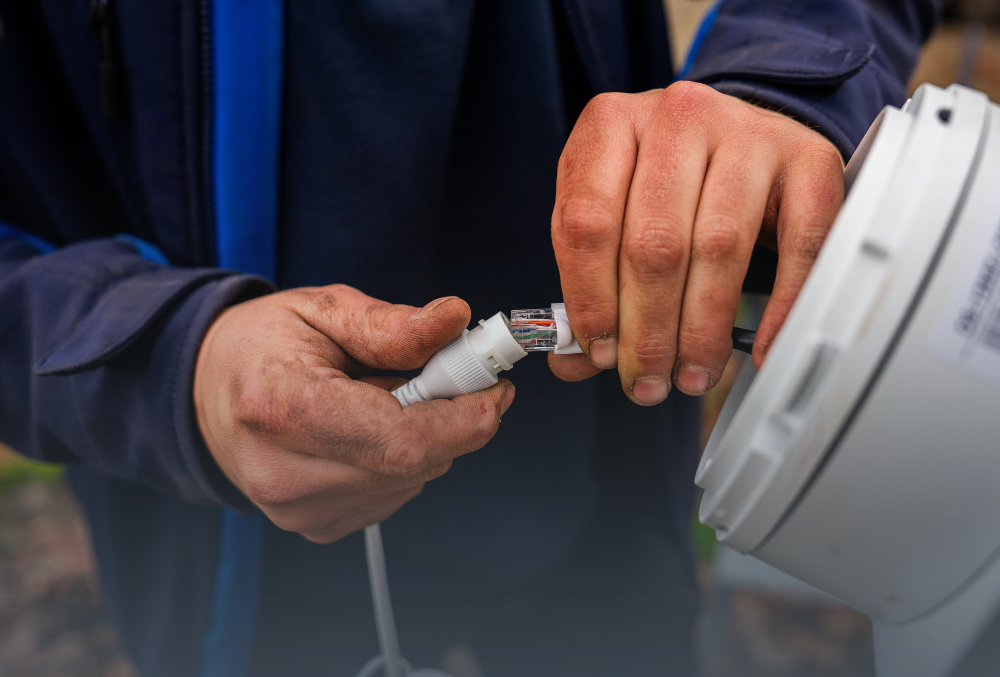
Many traditional security solutions were originally developed for business parks, logistics sites, or buildings, not for dynamic outdoor environments such as solar farms, wind farms, or battery storage sites.
That difference is crucial.
When a solar farm generates dozens or hundreds of false alarms every week, this leads to notification fatigue.
This has immediate consequences:
In some cases, detection zones are even set to be less sensitive to reduce the number of notifications. This actually lowers the actual level of security.
According to International Energy Agency (IEA) The number of large-scale solar parks is rapidly increasing worldwide. As a result, the importance of reliable security for energy assets is also growing.
AI security works fundamentally differently from traditional detection.
Instead of just registering movement, artificial intelligence analyses objects, behaviour, movement patterns, location, speed, direction, and even context in real time.
This allows the system to distinguish between:
This makes it possible to reduce false alarms at solar farms without having to lower the detection sensitivity.
| Traditional detection | AI security |
| Responds to movement | Analyse of behaviour and context |
| No object recognition | Recognises people, vehicles and animals |
| High probability of false alarms | Significant reduction in false reports |
| Reactive | Smarter risk assessment |
| High pressure in the control room | More efficient follow-up |
| No self-learning ability | Continue optimisation |
An AI system analyses video footage in real-time. The software looks at aspects such as object recognition, behaviour analysis, and contextual analysis.
The system recognises specific object types.
For example:
A moving bush is therefore not seen as an intruder.
The AI analyses movement patterns.
A person walking purposefully towards a fence behaves differently from an animal moving randomly.
Smart systems combine multiple factors:
This results in much more accurate detection.
According to the NIST AI Risk Management Framework, trustworthy AI analysis is becoming increasingly important within critical infrastructure and risk management.
Modern AI security learns from previous reports. When certain patterns consistently cause false reports, the system can further refine itself. This makes the system increasingly reliable.
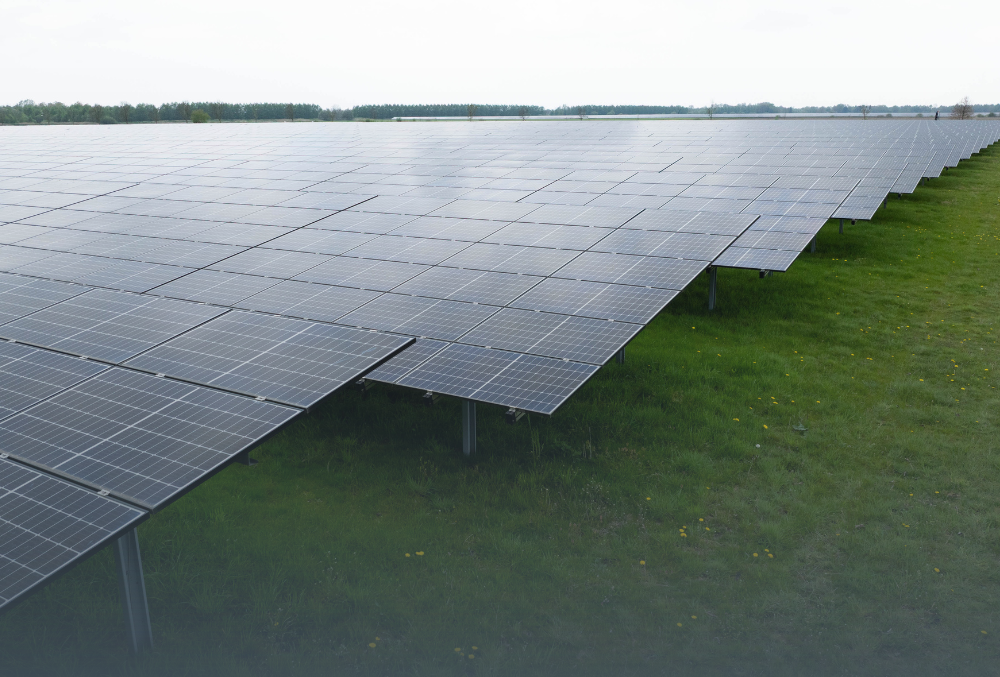
Dozens of daily reports were generated at a large solar farm in Northern Europe due to moving grass along the perimeter.
The result:
Following the shift to AI security, vegetation was automatically filtered out of the detection process.
Result
Many organisations underestimate the actual cost of false alerts at solar farms. The impact isn't just security-related.
False alarms at solar farms cause:
But indirect consequences also arise such as:
For large solar parks or battery storage sites, those costs can rise substantially.
False alarms at solar farms are no longer a minor technical issue. They affect the reliability of security systems, increase operational costs, and put greater pressure on control rooms.
Traditional detection technology often falls short in complex outdoor environments like solar farms, wind farms, and battery storage sites. AI security offers a fundamentally different approach to this. By analysing objects, behaviour, and context in real-time, systems can distinguish between actual threats and irrelevant movements.
Soldefence focuses specifically on AI security for energy assets and develops solutions designed for solar farms, battery storage and other critical infrastructure. Would you like to request more information? Please feel free to get in touch.
Due to weather influences, moving vegetation, reflection from solar panels, and traditional motion detection without context.
AI recognises objects, analyses behaviour and automatically filters out irrelevant movements such as animals or shadows.
Thermal cameras often perform better in dark outdoor environments, but are most effective when combined with AI analysis.
This differs per location, but costs arise from, among other things, control room follow-up, surveillance, maintenance, and operational disruption.
Yes. Modern AI security recognises specific object types and analyses movement patterns.
Sources:
AI Risk Management Framework | NIST. (2026, 7 April). NIST. https://www.nist.gov/itl/ai-risk-management-framework
International Energy Agency (n.d.) https://www.iea.org/
Euralarm. (n.d.). *Euralarm releases revised and expanded edition of study on false fire alarms in Europe*. https://www.euralarm.org/resource/euralarm-releases-revised-and-expanded-edition-of-study-on-false-fire-alarms-in-europe.html
© Soldefence 2025 | Online realisation: 050 Marketing
 Nederlands Nederlands
  English (UK)
 Deutsch
 Polski
 Español